(CNN) -- Last week, The New York Times gave us an inside look at what it's like to work at Foxconn, the manufacturing company that owns several China-based factories that crank out Apple's iPads, iPhones and iPods by the millions.
The story is full of examples of horrifying working conditions in Foxconn's factories that would never fly here in the United States. Here are some of the more troubling ones from the Times story:
Foxconn is a 24-hour operation. Employees work six days a week, sometimes in 12-hour shifts. They're on their feet for so long that their legs begin to swell. There are underage workers. They live in crowded dorms on the factory's campus. In recent years, there have been reports of workers leaping from buildings in apparent suicides.
And so on.
The story even describes the gruesome death of one Foxconn worker after an explosion in a facility that made iPads in Chengdu, China. The worker's "skin was almost completely burned away" by the blast, the Times reports. He died a few days later with his family by his side.
Foxconn denies the reports that working conditions are like what the Times describes. Apple refuses to comment on the record, but a leaked e-mail from CEO Tim Cook to all Apple employees says the company is committed to worker safety and that it takes all those claims very seriously.
So knowing all that, should we be concerned about where our iPhones and other gadgets come from and how they're made? Or is the human cost so far removed from us here in the United States that we're willing to look over it in favor of whatever fancy new touchscreen gadget Apple releases next?
The issue even has some people throwing around the idea of a boycott. One effort, hosted on the website Change.org, has collected more than 145,000 signatures from people calling on Apple to better protect its workers.
While those efforts sound noble, there's no way boycotting Apple gadgets will actually work.
Let's start with why people keep snapping up Apple's iPhones and iPads by the millions each week in the first place.
When it comes to smartphones and tablets, Apple still makes the best there are. With the iPhone and the iPad, the company set a new standard that other tech giants such as Google and Microsoft are still struggling to imitate. Apple can't make them fast enough. On launch days, people queue up in massive lines so they can be one of the first to get a new iPhone or iPad.
Even if consumers do know about what it took to make their new gadget, as many likely do thanks to the widespread reports on working conditions overseas, it's obviously not enough to keep them from getting caught up in the fervor of an Apple product launch.
I can't see that ending just because of a new story in The New York Times or a proposed boycott.
But it's not just about the massive popularity of Apple's gadgets that keep people buying. It's the price.
The latest and greatest iPhone model, the 4S, costs $199. iPads start at $499. One of the biggest reasons Apple can sell its stuff at such low prices is because they're produced on the cheap in China, sometimes by sacrificing good working conditions to make it happen. (If you believe the reports.)
Those cheap production costs are why a lot of the anger comes from the fact that Apple is a massively profitable company. Right now it has almost $100 billion sitting in the bank. It could use some of that cash to put more pressure on Foxconn and others to improve working conditions overseas.
A successful boycott could force Apple to make those changes, but consumers will have to sacrifice something, too.
In a poll from the Times that ran with its Foxconn story last week, most consumers thought companies such as Apple should make products in the U.S. but still absorb the added manufacturing costs.
In other words, consumers don't want to pay more for iPhones and iPads than they already do just to ensure factory workers get better working conditions. It's all about money.
So even if Apple moved production to the U.S. or managed to heavily invest in China and improve working conditions there, it would likely result in higher prices for consumers. For a profit-driven company such as Apple, there's almost no chance it would want to absorb those costs itself.
Yes, a lot of the heat on this issue has been put on Apple. But keep in mind it's not alone. Foxconn and similar manufacturers in Asia make gadgets for several other major consumer brands. It's not like suddenly switching from the iPhone to another smartphone will improve the lives of those who make it.
You may feel guilty buying an Apple product, but the problem won't be fixed until all electronics makers change, too.
In the end, consumers would be the ones who have to pay to make working conditions better for the people who make your iPhone. And it seems unlikely there are enough of you out there willing to do that.
Comment:
I think Apple should be good with their workers. They should pay more to the people. Workers have to have better protection when they are working on the tablets and phones. I think apple doesnt has to put the products more expensive because people wont buy it.
Tuesday, January 31, 2012

RODRIGO VILLALBA
 Not all sushi restaurants break the bank -- in Tokyo, there's a slice of awesomeness for all budgets.


The best sushi restaurants in Tokyo
Get your raw fish fix at the capital's sushi institutions
Ask five Tokyoites to name the best sushi restaurants in the city, and you’re likely to get five different answers -- the old "how long is a piece of string?" quandary.
That's because the sushi experience is a very personal one that can include not only raw seafood, but also things like unmatched service, chefs whose skills were honed by years of apprenticeship, an atmosphere that screams “traditional Japan” and, in many cases, a whopping bill.
Because of all this, any one traveler’s favorite sushi experience is going to largely depend on budget, interests and previous experience with the cuisine.
But the great thing about Tokyo is its sheer breadth and depth of choice when it comes to eating out.
Sushi is no exception, and at least one of these five restaurants or chains is sure to please just about any hungry visitor.
Just don’t expect to be chowing down on California and spicy tuna rolls, OK?
The breakfast choice: Sushi Dai
Get your fish on -- lines at 6 a.m. are nothing unusual at Sushi Dai.
Anyone dying to try the sushi-for-breakfast experience need look no further than Sushi Dai, located just steps from the Tsukiji fish market, which arguably serves the freshest seafood of anywhere in the world and is the unanimous choice as one of the best sushi restaurants in Tokyo.
After wandering through all the chaos and wonder that make up the Tsukiji market, visitors head to Sushi Dai to sample some of the very fish they’ve just seen being sold to chefs and restaurant owners from across the city.
But if a Sushi Dai breakfast is what you crave, then cancel your morning meetings -- the wait for a seat in the restaurant often lasts two hours or more. However, most who have dined there agree that the subsequent feast is worth the tedious queuing.
- More on CNNGo: How to eat sushi
In addition to the extreme freshness of its fare (often items like clam are still moving when the chef places them on the counter in front of diners), Sushi Dai also boasts relatively reasonable prices.
The most popular item is the chef’s special course of 10 nigiri and one roll, as well as one nigiri of the diner’s choice.
At ¥3,675 including tax, it makes a delicious meal any time of the day, and won’t break the bank.
Sushi Dai, 6-21-2 Tsukiji, Chuo-ku; +81 (0) 3 3541 3738; Monday-Saturday 10:30 a.m.-5 a.m. the next morning; Sunday and holidays 11 a.m.-10 p.m.
The lunch choice: Sushi Saito
The lunch set at Sushi Saito is one of Tokyo's hidden gems.
This tiny, unassuming sushi bar opposite the U.S. Embassy in Akasaka has many devotees and is booked out just as far in advance as Sushi Mizutani. It’s up to individual diners to decide which restaurant they prefer when on the hunt for the best sushi restaurants in Tokyo.
For a master sushi chef, Takashi Saito is young, surprisingly outgoing and friendly. Despite the local feel (there are only seven seats here), the atmosphere is warm and welcoming, and the chef makes an effort to tailor the courses to individual diners’ preferences.
- More on CNNGo: Organic sushi in Shibuya
Like Sushi Mizutani, Sushi Saito has been awarded three Michelin stars, but its lunch course may nonetheless be one of Tokyo’s best-kept dining secrets. At ¥5,500 yen it’s certainly not cheap, but the tender, flavorful seafood and perfectly seasoned rice are worth every penny.
Prices for dinner courses start at around ¥15,000. Chef Saito speaks a small amount of English and will do his best to communicate with each customer, but diners who don’t speak Japanese are advised to reserve via a hotel concierge or other Japanese-speaking person.
Sushi Saito, 1-9-15 Akasaka, Minato-ku; +81 (0) 3 3589 4412; noon-2 p.m. and 5 p.m.-11 p.m., closed on Sundays and some national holidays.
The value choice: Fukuzushi
Fukuzushi -- don't even think about reaching for the soy.
A family-owned establishment since 1917, Fukuzushi has occupied a quiet lot in the back streets of Roppongi for more than 40 years.
Unlike the plethora of tiny sushi bars that spans Tokyo, this restaurant is spacious (it even has a bar and lounge area), making it great for families, groups and business meetings.
Regular customers include many of Japan’s well-known entertainment personalities and celebrities drawn to one if the best sushi restaurants in Tokyo.
The current owner and master chef at Fukuzushi is George Fukuzawa, who honed his skills while studying the craft under both his father and grandfather.
Watching him and his assistants at work is half the fun of the experience, so small groups should opt for seats at the counter if possible.
Fukuzawa aims to please his customers in any way he can, while still maintaining the sense of pride for which sushi chefs are known.
He carefully seasons each piece of nigiri with exactly the right amount of wasabi and soy sauce, so don’t dunk yours in more shoyu unless you want to offend.
Careful attention is paid to every detail, such as cutting nigiri into two smaller pieces for women, so that they don’t have to struggle to try to bite them in half or chew on a huge piece of fish.
For one of Tokyo’s most popular sushi restaurants, Fukuzushi is priced slightly lower than many others. Lunch courses start at ¥2,625 and dinner courses go for ¥6,300 and ¥8,400.
At least two people need to order the dinner courses, but an à la carte menu is also available for solo diners.
Fukuzushi, 5-7-8 Roppongi, Minato-ku; +81 (0) 3 3402 4116; 11:30 a.m.-2 p.m. and 5:30 p.m.-11 p.m., closed on Sunday and national holidays.
MY OPINION
I THINK THAT ALL THE RESTAURANTS OF JAPAN ARE BERY GOOD BUT THIS RESTAURNTS ARE EXTREMELY COOL ,THERE ARE MANY CLEANNING IN THIS RESTAURANTS THE RESTAURANTS ARE VERY VERY FAMOUSE !!!
Thursday, January 26, 2012
Eco-industry park promotes shared vision
London (CNN) -- On a brownfield site in east London, not far from the site of the 2012 Olympic Park, a new green vision is emerging from the ashes of the UK capital's dirty industrial past.
Once the home of a coal-fired power station, the London Sustainable Industries Park (SIP) at Dagenham Dock is creating the largest concentration of environmental businesses in the UK.
The concept to transform the area into a clean-tech hub was originally devised by the local government authority (Barking and Dagenham) who were keen to promote jobs and prosperity in the wake of cutbacks at automaker Ford's Dagenham car plant.
Since 2007, the London Thames Gateway Development Corporation (LTGDC) -- a UK government agency tasked with overseeing regeneration of areas all over east London -- has been securing planning consent for the site's infrastructure.
But that's not all they're doing says Mark Bradbury, LTGDC's deputy director of development.
"We're also putting in a lot more landscape infrastructure ... creating an environment which is much more business park than industrial estate," he said.
So along with industrial units which meet BREEAM standards, there are swales and trees to help with water and air pollution, he says.
A heat network is also being installed allowing some of the energy produced to be shared by businesses on site. The goal, says Bradbury, is industrial symbiosis.
This sharing of material by-products, water and energy by local industries rather than importing resources from outside is an idea which has gained momentum over the past two decades, says Marian Chertow, associate professor of industrial environmental management at Yale University.
"Many urban areas with industrial concentrations find that symbiotic activities arise spontaneously as they are economically efficient for firms even before counting environmental benefits," Chertow said.
"Over time, and with some coordination, these can become extensive networks for resource sharing and community building," she added.
A leading early adopter of this philosophy was the city of Kalundborg, Denmark.
Established in 1972, their eco-industrial park has evolved "from a single power station into a cluster of companies that rely on each other for material inputs," according to the International Institute for Sustainable Development.
So although the London SIP isn't the first it is unique, Bradbury says.
"We believe we are the first park to actively set out to achieve this from the start -- to almost vet our occupiers from the outset to really look at how they will add to the mix and that they buy into the symbiosis ethos of shared inputs and outputs," he said.
So far only one tenant -- plastics recycler Closed Loop Recycling -- is on site but others are set to move in next year.
Waste-management company Cyclamax is scheduled to install a renewable-energy power plant creating 16 megawatts of electricity early in the new year, while TEG (an organic waste recycler) has been given the green light to develop an anaerobic digestion plant.
Closed Loop Recycling, which handles 35,000 tons of plastic bottles every year, is looking forward to the eco-freindly synergies that its neighboring tenants will provide when they arrive.
"There is good potential that we will be able to take some of the heat from the anaerobic digester and composting facility to heat our wash water," said Nick Cliffe, marketing manager for Closed Loop Recycling.
In return, bits of bottle that can't be recycled, including labels, could be sent over to Cyclamax's gasification plant, says Cliffe.
He's also optimistic about future symbiotic relationships being formed with plastic upcyclers who are expected to join the park.
"It's a great site," Cliffe said. "There's a real chance if the right kind of businesses come together that we can work stronger together rather than being more distributed."
The vision is that over the next 15-20 years the park can provide the area with a supply of green energy, Bradbury says, kick-starting renewed interest and investment in the area.
"The ultimate aim is to have a range of businesses which gradually get more and more high-tech as the cluster grows," he said.
Comment:
I think its good do think green, and start saving the planet. Its importatn to be a green person. Its good if industries will use green energy.
Once the home of a coal-fired power station, the London Sustainable Industries Park (SIP) at Dagenham Dock is creating the largest concentration of environmental businesses in the UK.
The concept to transform the area into a clean-tech hub was originally devised by the local government authority (Barking and Dagenham) who were keen to promote jobs and prosperity in the wake of cutbacks at automaker Ford's Dagenham car plant.
Since 2007, the London Thames Gateway Development Corporation (LTGDC) -- a UK government agency tasked with overseeing regeneration of areas all over east London -- has been securing planning consent for the site's infrastructure.
We're putting in a lot more landscape infrastructure creating an environment which is much more business park than industrial estate
Mark Bradbury, LTGDC
Mark Bradbury, LTGDC
"We're also putting in a lot more landscape infrastructure ... creating an environment which is much more business park than industrial estate," he said.
So along with industrial units which meet BREEAM standards, there are swales and trees to help with water and air pollution, he says.
A heat network is also being installed allowing some of the energy produced to be shared by businesses on site. The goal, says Bradbury, is industrial symbiosis.
This sharing of material by-products, water and energy by local industries rather than importing resources from outside is an idea which has gained momentum over the past two decades, says Marian Chertow, associate professor of industrial environmental management at Yale University.
"Many urban areas with industrial concentrations find that symbiotic activities arise spontaneously as they are economically efficient for firms even before counting environmental benefits," Chertow said.
"Over time, and with some coordination, these can become extensive networks for resource sharing and community building," she added.
A leading early adopter of this philosophy was the city of Kalundborg, Denmark.
Established in 1972, their eco-industrial park has evolved "from a single power station into a cluster of companies that rely on each other for material inputs," according to the International Institute for Sustainable Development.
It's a great site. There's a real chance if the right kind of businesses come together that we can work stronger together rather than being more distributed
Nick Cliffe, Closed Loop Recycling
Nick Cliffe, Closed Loop Recycling
"We believe we are the first park to actively set out to achieve this from the start -- to almost vet our occupiers from the outset to really look at how they will add to the mix and that they buy into the symbiosis ethos of shared inputs and outputs," he said.
So far only one tenant -- plastics recycler Closed Loop Recycling -- is on site but others are set to move in next year.
Waste-management company Cyclamax is scheduled to install a renewable-energy power plant creating 16 megawatts of electricity early in the new year, while TEG (an organic waste recycler) has been given the green light to develop an anaerobic digestion plant.
Closed Loop Recycling, which handles 35,000 tons of plastic bottles every year, is looking forward to the eco-freindly synergies that its neighboring tenants will provide when they arrive.
"There is good potential that we will be able to take some of the heat from the anaerobic digester and composting facility to heat our wash water," said Nick Cliffe, marketing manager for Closed Loop Recycling.
In return, bits of bottle that can't be recycled, including labels, could be sent over to Cyclamax's gasification plant, says Cliffe.
He's also optimistic about future symbiotic relationships being formed with plastic upcyclers who are expected to join the park.
"It's a great site," Cliffe said. "There's a real chance if the right kind of businesses come together that we can work stronger together rather than being more distributed."
The vision is that over the next 15-20 years the park can provide the area with a supply of green energy, Bradbury says, kick-starting renewed interest and investment in the area.
"The ultimate aim is to have a range of businesses which gradually get more and more high-tech as the cluster grows," he said.
Comment:
I think its good do think green, and start saving the planet. Its importatn to be a green person. Its good if industries will use green energy.
Marg Helgenberger on shooting her final 'CSI' episode
In preparation for Marg Helgenberger's last episode of "CSI" -- which
aired on Wednesday on CBS -- EW talked to the 53-year-old actress about
becoming the third original star (behind Gary Dourdan and William
Petersen) to depart the long-running crime drama, as well as what she'll
miss, and whether she'll ever come back.
comment: I used to watch csi and I know ho is Marg Helgenberger, she is one of the three original members of csi, Ithink that is bad for everyone that watches csi that she is leaving because she was a good actrees, but it is good for her to go for another program to act or dedicate to another carreer. And obviously they will replase her with another actress or actor.
comment: I used to watch csi and I know ho is Marg Helgenberger, she is one of the three original members of csi, Ithink that is bad for everyone that watches csi that she is leaving because she was a good actrees, but it is good for her to go for another program to act or dedicate to another carreer. And obviously they will replase her with another actress or actor.
Ethical chocolate, U.S. consumers, what the Swiss think and more
One of the children featured in the documentary, "Chocolate's Child Slaves," has never eaten chocolate and at 12 years of age, he wishes he could go to school instead of working. CNN attends a workshop for kids on ethical chocolate and gets their reaction to the plight of their peers on the cocoa plantations.
Americans love chocolate and eat about 11 pounds of it per person each year but what if they knew it might be made with child slave labor? Would they be willing to pay more to make sure that their chocolate is slave-free?
The Swiss are the second largest consumers of chocolate per capita. CNN goes to Zurich to ask the Swiss if they know where their famous chocolate really comes from.
Meet Steve Chalke, founder of Stop the Traffik. At his store, he showsconsumers how to make right choices when buying chocolate, the kinds of certification to look for and why it's so important for consumers to be accountable.
There were 4 videos but I can´t put them.
Comentary:
Thes boys work being children at the cocoa industry and they havent eat a chocolate. This cruel for they. Thats why we need to buy slave- free chocolate because these is a critical thing.
Gates donates $750 million to fight AIDS, TB and malaria
Davos, Switzerland (CNN)
The Bill & Melinda Gates Foundation will inject $750 million into the Global Fund to Fight AIDS, Tuberculosis and Malaria, Microsoft co-founder Bill Gates announced Thursday at the World Economic Forum.
The donation comes in the form of a promissory note, not as cash, which the Gates Foundation said "gives the Global Fund the flexibility and authority to distribute funds efficiently based on immediate needs."
"By supporting the Global Fund, we can help to change the fortunes of the poorest countries in the world," Gates said in a statement. "I can't think of more important work."
At a news conference at the World Economic Forum in Davos, Gates said the funds could be used immediately to "saves lives, whether it is bed nets (to protect against mosquitoes carrying malaria) or TB (tuberculosis) treatment, those are two diseases that don't get perhaps the visibility of the work done in HIV but they are every bit as important."
The investment comes on top of $650 million the Gates Foundation has already contributed since the Global Fund was launched 10 years ago.
The fund has been under scrutiny after controversy over the possible misuse of funds. Dr. Michel Kazatchkine, executive director of the fund, said Tuesday he would resign in March after leading the organization for five years. Kazatchkine cited the fund's decision to appoint a general manager as part of its "ambitions transformation plan" as the reason for his departure.
Speaking to journalists with Simon Bland, the Global Fund's chair, Gates downplayed the controversy.
The way it had been written about was "pretty disappointing," he said. "If you are going to do health programs in Africa, you are going to have some percentage that is misused."
"The interest is saving lives," Gates said, adding there were "all sorts of things that are going on that far overwhelm any amount of misdirection or whatever it was."
Commentary:
I think that is very good that a lot of people are concerned about these diseases and also is very good and generouse that Bill Gates donate that amount of money because that also remember to a lot of people that is in a good quality of life that a lot of people is suffering by these diesases.
The Bill & Melinda Gates Foundation will inject $750 million into the Global Fund to Fight AIDS, Tuberculosis and Malaria, Microsoft co-founder Bill Gates announced Thursday at the World Economic Forum.
The donation comes in the form of a promissory note, not as cash, which the Gates Foundation said "gives the Global Fund the flexibility and authority to distribute funds efficiently based on immediate needs."
"By supporting the Global Fund, we can help to change the fortunes of the poorest countries in the world," Gates said in a statement. "I can't think of more important work."
At a news conference at the World Economic Forum in Davos, Gates said the funds could be used immediately to "saves lives, whether it is bed nets (to protect against mosquitoes carrying malaria) or TB (tuberculosis) treatment, those are two diseases that don't get perhaps the visibility of the work done in HIV but they are every bit as important."
The investment comes on top of $650 million the Gates Foundation has already contributed since the Global Fund was launched 10 years ago.
The fund has been under scrutiny after controversy over the possible misuse of funds. Dr. Michel Kazatchkine, executive director of the fund, said Tuesday he would resign in March after leading the organization for five years. Kazatchkine cited the fund's decision to appoint a general manager as part of its "ambitions transformation plan" as the reason for his departure.
Speaking to journalists with Simon Bland, the Global Fund's chair, Gates downplayed the controversy.
The way it had been written about was "pretty disappointing," he said. "If you are going to do health programs in Africa, you are going to have some percentage that is misused."
"The interest is saving lives," Gates said, adding there were "all sorts of things that are going on that far overwhelm any amount of misdirection or whatever it was."
Commentary:
I think that is very good that a lot of people are concerned about these diseases and also is very good and generouse that Bill Gates donate that amount of money because that also remember to a lot of people that is in a good quality of life that a lot of people is suffering by these diesases.
Comment: I am very excited about this new , because my idol on woman Tennis is "Sharapova". I think that it was a great mach for part of Sharapova because she wins to the player number "2" of tennis, and I hope that she wins the Australia Open.
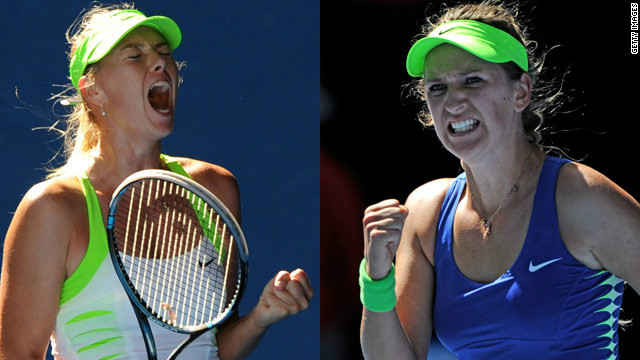
Sharapova vs. Azarenka: No. 1 rivals to battle for Australian Open title
 (CNN) -- In terms of age, just two years separate Australian Open finalists Maria Sharapova and Victoria Azarenka. But in terms of what the two young women have achieved in their tennis careers so far, they are poles apart.
Since bursting onto the scene as a 17-year-old Wimbledon champion in 2004, Sharapova's model looks and three grand slam triumphs, combined with her rise and fall from the top of the world rankings, have kept her in the public eye.
In contrast, the 22-year-old Azarenka is enjoying her finest run at one of tennis' four major tournaments. Thursday's 6-4 1-6 6-3 semifinal win over defending champion Kim Clijsters has put her within touching distance of a first grand slam title.
To add extra spice to Saturday's Melbourne showdown, both world No. 4 Sharapova and the third-ranked Azarenka can claim top spot with victory in the Rod Laver Arena showdown
(CNN) -- In terms of age, just two years separate Australian Open finalists Maria Sharapova and Victoria Azarenka. But in terms of what the two young women have achieved in their tennis careers so far, they are poles apart.
Since bursting onto the scene as a 17-year-old Wimbledon champion in 2004, Sharapova's model looks and three grand slam triumphs, combined with her rise and fall from the top of the world rankings, have kept her in the public eye.
In contrast, the 22-year-old Azarenka is enjoying her finest run at one of tennis' four major tournaments. Thursday's 6-4 1-6 6-3 semifinal win over defending champion Kim Clijsters has put her within touching distance of a first grand slam title.
To add extra spice to Saturday's Melbourne showdown, both world No. 4 Sharapova and the third-ranked Azarenka can claim top spot with victory in the Rod Laver Arena showdown
Comment: In my opinion this is a great new. Because I am Barcelona.
I saw the game and I was really excited about the Score because if that game was finish on tie , Barcelona will pass to Semifinals.
Barcelona hold on to knock 10-man Real Madrid out of Spanish Cup.

CNN) -- Barcelona survived a late onslaught from rivals Real Madrid to win their Spanish Cup quarterfinal tie 4-3 on aggregate and knock the holders out on Wednesday.
In a dramatic game at Barcelona's Camp Nou stadium, the hosts went 2-0 up thanks to goals from Pedro and Daniel Alves before strikes from Cristiano Ronaldo and Karim Benzema leveled the match at 2-2.
Real laid siege to their opponents' goal in the final stages, even after defender Sergio Ramos was sent off, but couldn't find the goal that would have taken them through.
Jose Mourinho's side complained bitterly to the referee after the match but the result is sure to intensify pressure on the Portuguese coach, who has been forced to deny press rumors he is set to leave the club in June.
Wednesday, January 25, 2012
SOPA and PIPA attract huge lobbying on both sides
NEW YORK (CNNMoney) -- Two controversial anti-piracy bills, now effectively dead in the water, attracted enormous lobbying attention on both sides.
A total of 145 companies and organizations lobbied the House of Representatives for and against the Stop Online Piracy Act (SOPA), while157 groups lobbied for and against its sister bill in the Senate, the Protect Intellectual Property Act (PIPA), according to the Center for Responsive Politics.Comcast (CMCSA, Fortune 500), which supported both bills, was by far the biggest lobbyist, spending upwards of $5 million on the issue. In opposition to the bills, Google (GOOG, Fortune 500) was the largest lobbyist, spending about $4 million. Lobbying totals are only very rough estimates, because companies often include multiple bills and issues in their lobbying reports to Congress.
SOPA and PIPA were proposed bills that aimed to crack down on copyright infringement by restricting access to sites that hosted or facilitated the trading of pirated content.
SOPA explained: What it is and why it matters
Though opponents agreed that protecting content is a worthy goal, they argued that the way the bills were written effectively promoted censorship and were rife with the potential for unintended consequences.
The largest proponents came primarily from the commerce and media industries. Visa (V, Fortune 500) and Mastercard (MA, Fortune 500) spent several hundred thousand dollars, as did National Amusements, AT&T (T, Fortune 500), News Corp. (NWS) and Time Warner (TWX, Fortune 500), CNNMoney's parent company. The cable, motion picture and recording industry lobbies also spent heavily in support of the bills.
The opposition was headed by Internet companies like eBay (EBAY,Fortune 500), Yahoo (YHOO, Fortune 500), Amazon (AMZN,Fortune 500) and the Web's domain registry, the Internet Corporation for Assigned Names and Numbers.
But some unexpected names also lobbied Congress about SOPA and PIPA, including Tiffany (TIF), Ultimate Fighting Championship and Pepsi (PEP, Fortune 500). However, companies are not required to disclose whether they lobbied for or against a particular bill.
It was a tremendous lobbying effort on both sides, though it was not enough to crack the top-10 most-lobbied bills of 2011.
Interestingly, the lobbying effort may not have been what ultimately sealed the bills' fate. After a massive pushback from tech companies and their supporters in online and physical protests, both SOPA and PIPA wereofficially "postponed" on January 20.
My comment
I think it shoul eliminate does rules because it interrumps some companies and some people that want visit some sites for free
Subscribe to:
Posts (Atom)